Pretty Little Christmas Trees – Graphics & Illustrations Review
Every year around September, I start sketching out my holiday product lineup for my Etsy shop and the local craft fairs I attend. This year, I needed something versatile enough to span multiple product categories without feeling repetitive or stale. That search led me to Pretty Little Christmas Trees, a design asset that caught my eye with its promise of variety. After downloading it and running it through my full workflow, I wanted to share an honest, practical review for fellow crafters, Cricut users, and handmade business owners who might be considering it for their own seasonal collections.
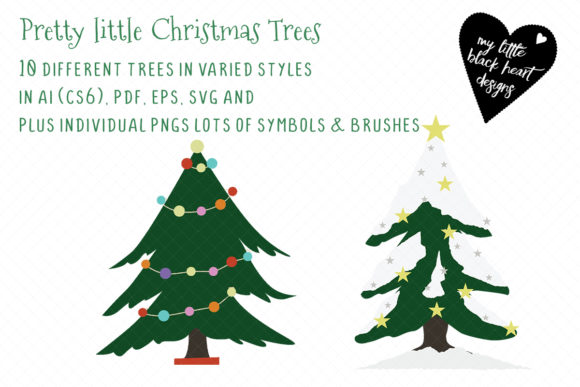
The set includes ten distinct Christmas tree illustrations, and what struck me immediately was how much ground they cover stylistically. You get the classic full-bodied evergreen shape that feels traditional and cozy, but also a sleek minimalist outline that would sit beautifully on modern greeting cards. There is a bare branch tree with delicate twigs, and surprisingly, a palm tree decked out with festive ornaments, which opens up a whole different customer base who celebrate Christmas in warmer climates. The range genuinely surprised me. It is not often that a single graphics bundle manages to cater to rustic farmhouse aesthetics, Scandinavian simplicity, and playful tropical themes all at once.
First Impressions and the Mood These Trees Create
Opening the folder for the first time, I felt a sense of relief. The designs are clean, and the preview thumbnails gave me an immediate sense of how each tree would translate to different materials. Some sets I have purchased in the past suffered from overly intricate details that became muddy on vinyl or lost their charm when resized. Pretty Little Christmas Trees avoids that pitfall fairly well. The traditional tree reads as warm and nostalgic, perfect for projects aimed at family-oriented buyers. The minimal trees lean into a contemporary, almost editorial look that I could easily see on a set of linen throw pillows or a batch of understated holiday cards. The bare tree carries a whimsical, slightly rustic energy that pairs wonderfully with kraft paper gift tags. And the palm tree illustration brings a playful, unexpected twist that could anchor an entire beach-themed Christmas collection.
From a branding standpoint, these design assets offer what I would call adaptable personality. You are not locked into one narrow aesthetic. If your handmade business caters to multiple buyer personas, you can use different trees from the set to speak to each segment without purchasing separate bundles. That flexibility matters when you are managing a tight seasonal production budget.
What Kind of Handmade Products These Illustrations Shine On
I ran test cuts and prints across several of my most popular product types to see how Pretty Little Christmas Trees performed in real crafting conditions. Here is where I found the strongest results and what I would recommend to other makers.
T-Shirt and Apparel Designs
The bolder tree silhouettes work exceptionally well for heat transfer vinyl and sublimation. On a soft cotton tee, the traditional tree with its clear shape pressed cleanly and read beautifully from a distance. For a more subtle look, I placed one of the minimal trees on a crewneck sweatshirt using a muted green palette, and the result felt premium and boutique-worthy. If you sell at craft fairs or through a print-on-demand service, these illustrations transfer smoothly to apparel without losing their charm.
Mugs, Tumblers, and Drinkware
Sublimating the designs onto ceramic mugs gave me some of my favorite results. The palm tree illustration on a white mug with gold accents looked like something you would find in a coastal gift shop. I also tested a tumbler wrap layout featuring two of the smaller trees arranged in a subtle repeating pattern, and the final product felt polished and gift-ready. One note: the finer details on the bare tree required a slightly higher pressure setting to transfer crisply, so always test on a blank before committing to a full batch.
Stickers, Gift Tags, and Paper Goods
This is where the set truly excels. The PNG design files printed beautifully on matte sticker paper, and each tree held its shape well when kiss-cut with my Silhouette. I created a sheet of coordinating gift tags featuring four different trees from the bundle, and they looked cohesive without being identical. For printable clipart products, these illustrations slot in perfectly. Planner stickers, holiday card inserts, party favor tags, and even small decorative seals for packaging all benefit from the variety this set provides.
Printable Wall Art and Seasonal Décor
I scaled up a few of the designs to test them as printable wall art, framing them in simple black frames for a craft fair display. The minimal tree paired with a short handwritten-style sentiment felt elegant and sold quickly. The bare tree printed on textured cardstock and placed in a rustic wooden frame appealed strongly to buyers looking for understated holiday décor. These illustrations hold their visual weight at larger sizes, which is not always true of digital product graphics designed primarily for small-scale use.
Where These Designs Perform Best and Where to Be Careful
No design asset is universally perfect, and I believe in being upfront about limitations so fellow crafters can make informed decisions. Here is my honest breakdown based on hands-on testing.
Where they shine: Large cut files for tote bags, pillow covers, and apparel backs perform beautifully. The tree shapes are distinct enough that even the simpler designs register immediately as Christmas trees, which matters when a customer glances at a product from across a craft fair aisle. Clean printable layouts for cards, tags, and planner inserts also come together quickly since the illustrations do not require excessive resizing or rearranging. Seasonal craft bundles, gift products, and personalized items all benefit from the range of styles included. I also found the designs useful for creating product mockups when planning out my holiday collection visually before producing physical samples.
Where caution is needed: Very small cutting details on the bare tree can become fragile when sized below roughly one and a half inches. Thin lines may tear during weeding if you are using adhesive vinyl and working quickly. Crowded compositions that place multiple detailed trees too close together risk looking cluttered, so give each illustration breathing room in your layout. Low-contrast color choices can mute the finer branches, especially on dark garments. If you are planning layered vinyl projects, stick to the bolder tree silhouettes rather than the delicate ones, as registration becomes trickier with intricate lines. For small sticker sizes under one inch, some of the more detailed trees lose readability, so choose the simpler shapes for tiny kiss-cut sheets.
Technical Notes Every Crafter Should Check Before Cutting or Printing
I have learned through experience that even beautiful SVG design files sometimes contain hidden issues that derail a production run. Here is what I tested and what you should verify in your own workflow before offering finished products to customers.
- SVG cut lines: I imported each tree into Cricut Design Space and Silhouette Studio. The paths were clean and connected on nine of the ten designs. One tree had a small open path that required a quick node edit, but it was a minor fix. Always run a preview cut before producing multiples.
- PNG transparency: The transparent backgrounds rendered correctly in every program I tested, including Photoshop, Canva, and Affinity Designer. No white halos or jagged edges appeared when placing the graphics on colored backgrounds.
- Resolution for sublimation: The files held up well at standard sublimation print sizes. I printed at three hundred DPI without any visible pixelation, even when enlarging slightly beyond the native dimensions. For oversized prints above twelve inches, do a test swatch first.
- Color testing: Your printer, ink, and substrate combination will produce different results than what you see on screen. I printed the same tree illustration on five different paper types, and the color varied noticeably on each. Always run a small test batch before committing to a full production run, especially for customer orders.
- Mockup placement: Before cutting or printing dozens of units, place the design on a real product mockup to assess scale, placement, and how the illustration interacts with the product shape. What looks balanced on a screen sometimes feels off-center on a physical mug or shirt.
Styling Tips, Fonts, and Color Pairings
Over the years, I have developed a sense of which typography styles complement different illustration aesthetics. For the traditional and bare tree designs, a serif font with moderate contrast lends a timeless, cozy feel that works beautifully on greeting cards and gift tags. The minimal trees pair exceptionally well with clean sans serif fonts, especially when you are aiming for a modern, Scandinavian-inspired look. If you want a softer, more personal touch, a handwritten script font alongside the bare tree or traditional tree creates an intimate, handmade feel that resonates strongly with Etsy buyers.
For the palm tree illustration, I experimented with a playful display font and loved the result. It felt festive without being overly formal, which suits products aimed at younger buyers or customers in coastal regions. You can also use a bold sans serif for a graphic, statement-driven layout that works on tote bags and oversized apparel prints. The key is to let the tree illustration lead and choose typography that supports rather than competes with it.
Color-wise, these illustrations adapt readily. Classic holiday reds, greens, golds, and whites are obvious choices, but do not overlook softer palettes. Blush pink, sage green, muted navy, and cream feel surprisingly fresh against the minimal trees. I created a small collection of neutral-toned products using only cream and taupe colorways, and they sold out faster than my traditional red-and-green items at a November market. Customers appreciate having options that fit non-traditional home décor.
Building a Seasonal Collection Around These Tree Illustrations
One of the smartest ways to use Pretty Little Christmas Trees is to build an entire coordinated collection rather than isolated one-off products. I structured my holiday line this year around four product categories, each featuring different trees from the set to create variety while maintaining a recognizable visual thread. My mug collection used the traditional tree and the bare tree in alternating designs. The sticker and gift tag sets pulled from all ten illustrations for maximum variety. Apparel focused on the bolder silhouettes, while printable art leaned into the minimal and bare tree aesthetics.
This approach gave my craft fair booth a cohesive look without feeling monotonous. Customers who bought a mug also noticed the matching gift tags and often added them to their purchase. From a small business branding perspective, having a unified seasonal line helps build perceived value and encourages multiple-item sales. If you sell on Etsy, listing complementary items with consistent styling in your product photos creates a professional shop appearance that buyers trust.
Commercial Licensing and Selling Finished Products
Before you list anything for sale, confirm the commercial license terms attached to these graphics. Most marketplaces allow you to sell physical finished products like mugs, shirts, stickers, and printed goods without issue, but restrictions may apply to digital resale or redistribution of the original files. Read the license carefully. If you plan to use these illustrations on print-on-demand products, verify that the license covers that usage model. I always keep a copy of the license documentation saved in my business records so I can reference it quickly if a question arises.
Final Thoughts for Handmade Sellers and Crafters
After several weeks of working with Pretty Little Christmas Trees across multiple product types and materials, I can confidently say this bundle earns its place in a crafter's seasonal toolkit. The variety among the ten trees genuinely expands what you can create without needing to source additional design assets from multiple shops. The traditional, minimal, bare, and palm styles cover enough ground that you can serve different customer tastes under one cohesive product umbrella.
For Cricut and Silhouette users making physical goods, the bold silhouettes will give you the fewest headaches during weeding and application. For printable product creators, the full range opens up endless combinations for cards, tags, planner stickers, and wall art. For handmade business owners planning a holiday collection or preparing for a craft fair, having ten coordinated illustrations at your fingertips simplifies product development and shortens your design time meaningfully.
No set is flawless. Delicate details on the finer trees demand careful handling, and you should always test before scaling up production. But those are standard precautions for any graphic design asset used in physical crafting. The overall quality, stylistic range, and real-world usability of this bundle make it a practical addition to a handmade seller's creative library. If you are building out your holiday product line and need tree illustrations that can stretch across mugs, shirts, stickers, gift tags, and printable décor without looking repetitive, Pretty Little Christmas Trees is worth serious consideration.